






.svg)

.jpg)












Uniform blog/Small workforces thrive with composable
Small workforces thrive with composable

Small workforces thrive with composable
TL;DR
Small teams can leverage composable platforms and integrated AI to launch digital experiences faster and more efficiently. By eliminating technical dependencies and simplifying workflows through unified tools and automation, small workforces can achieve enterprise-grade personalization and speed. The key takeaway: composable digital experience platforms empower lean teams to compete and scale without added headcount.
In today’s economy, competitive advantage is no longer driven by headcount. Velocity and scalability are defined by a brand’s digital architecture, marketing speed, and the agility to adapt faster than industry peers.
Small organizations are beating larger companies in the race for more customers and better experiences by reducing both friction in digital workflows and the time it takes to move campaigns from ideation to launch.
What does it take to thrive in today’s landscape? Here’s how modern composable platforms, from visual workspaces to agentic AI, let small but mighty workforces publish fast, high-performing experiences without the overhead of large, cross-functional departments or legacy tech stacks.
The bottleneck isn’t headcount—it’s dependencies
Marketers and developers in small organizations often lack large budgets and cross-functional teams to support the digital experience lifecycle. Therefore, operational efficiency—moving easily between tools and through workflows—is critical for success.
Large teams might suffer from complex processes, long approval chains, and technical dependencies. However, smaller workforces also share the pain of waiting in never-ending IT support queues and lacking architectural support for moving digital projects from prototype to production.
Without a composable digital experience platform (DXP) to accelerate content delivery, time-to-market delays can easily plague small and large organizations alike, killing momentum and dulling the company’s competitive edge.
Composable accelerates marketing speed and autonomy
The digital economy demands speed and agility. Otherwise, today’s market gainers can quickly become tomorrow’s losers.
Additionally, legacy architectures often burden digital teams with volumes of custom code, which makes:
- Adding and replacing tools expensive and time-consuming
- Connecting systems like headless CMSs, DAMs, and CDPs more complex
- Customizing rigid architecture costly to maintain and difficult to adapt.
The advantage of a truly composable platform is its atomic components, which bypass the need for extensive code by enabling non-technical users to create dynamic experiences using pre-configured components that leverage content and data from multiple integrated sources.
The result? Small digital teams can assemble and publish experiences in hours versus weeks or months. The use of pre-built branded components removes unnecessary approvals and development steps from marketing workflows, enabling even solo marketers to launch faster and experiment more freely.
Agentic AI amplifies capabilities across the content lifecycle
Context switching—shifting between browser tabs to build cohesive experiences—can be a time killer and slow small departments that depend on speed for fast campaign launches. By contrast, a composable DXP provides integrated AI capabilities that eliminate the need to switch between different systems.
With all tools and technology seamlessly integrated into the marketer’s visual workspace–and brand governance defined at the project level–page-building projects are simplified to clicks on a single tab.
A truly integrated AI agent can also leverage these integrations to assist users in laborious tasks, from analyzing traffic data to implementing data-driven personalization.
Working in a composable environment enables rapid testing and personalization of content based on customer data. In addition to the agent, a composable DXP integrates seamlessly with preferred generative AI tools, allowing builders to generate compelling copy and images in seconds, directly in the workspace.
For lean marketing teams where seconds matter, compressing the time it takes to craft on-brand, SEO-rich copy and images can be a game-changer in competitive, fast-moving markets.
Composable platforms help small teams make a big impact
Stop being held back by rigid architectures not designed for your digital experience needs or ambitious sales targets. The Uniform DXP unites content, data, and technology into a visual workspace engineered for speed and built for scrappy teams that must do more with less.
Schedule a demo today to explore how Uniform can help small workforces create digital experiences at record speed.
FAQs
Composable platforms reduce dependencies, eliminate friction in workflows, and allow marketers to assemble experiences using pre-built components—cutting launch times from weeks to hours.
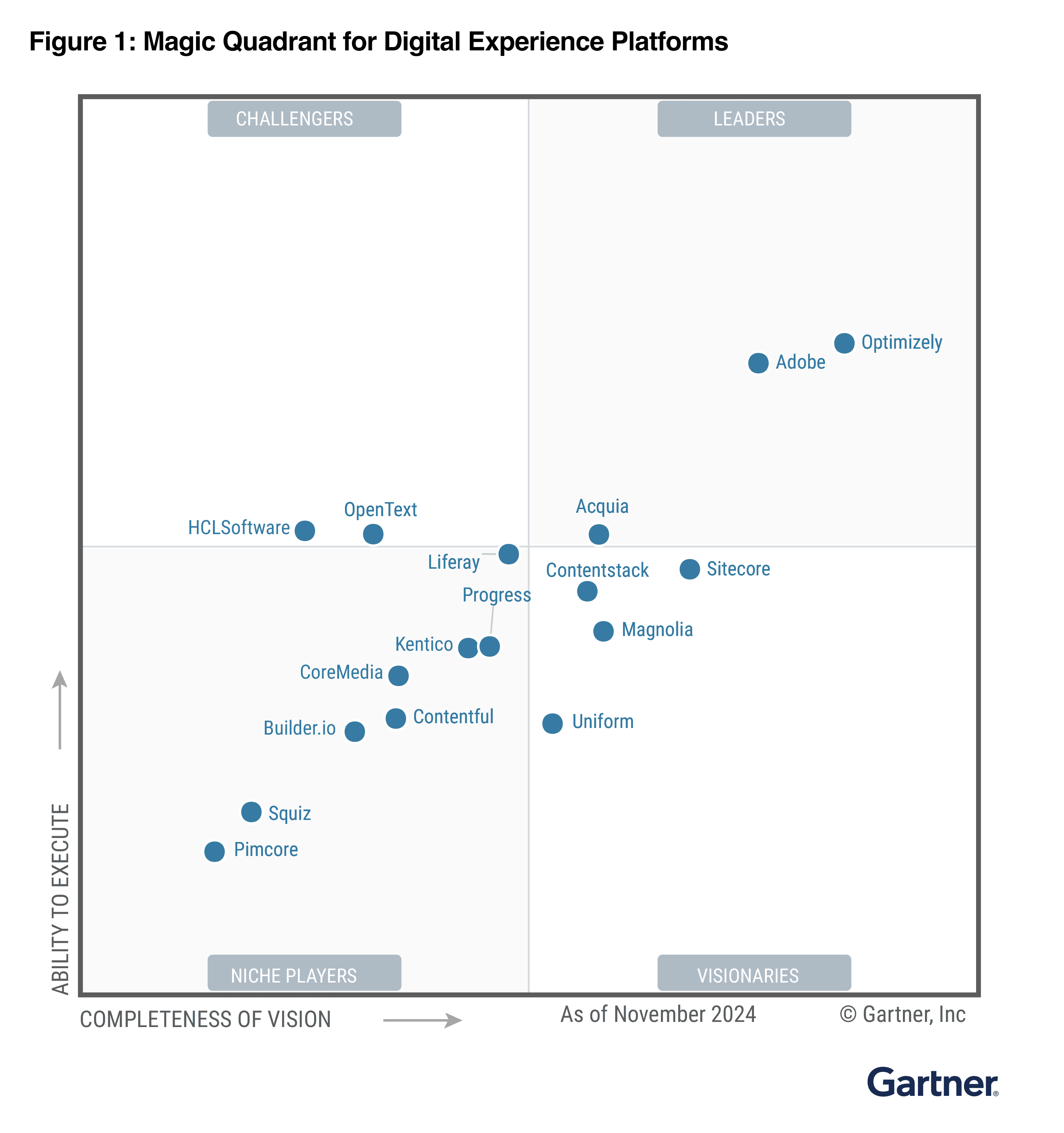
Uniform Recognized as a Visionary in 2025 Gartner® Magic Quadrant™ for Digital Experience Platforms
Learn More.png&w=1080&q=90)
.png&w=1080&q=90)
.png&w=1080&q=90)